
Cost for Boiler Installation: When Additional Safety Work Changes the Final Scope
Learn when safety-related work can change the cost of a boiler installation and how flue, gas, ventilation and commissioning requirements affect the final scope.

Why you can trust our content
We know that the boiler industry can be confusing, but we only use trusted sources, including:





At a glance
Replacing a boiler is often treated as a straightforward swap: remove the old appliance, install the new one and reconnect the existing system. In some homes, that may be close to what happens. In others, the installation reveals additional work that needs to be addressed before the new boiler can be safely commissioned.
This is why the cost for boiler installation can sometimes change between an initial discussion and the completed job. The difference is not necessarily caused by an installer adding unnecessary work. It can arise because the final scope depends on the property, existing system, appliance requirements and condition of components that may only become clear during a survey or installation.
For homeowners in Mansfield, understanding which additional items can affect the scope makes it easier to compare quotes and recognise the difference between a genuine safety requirement and an unexplained extra charge.
What Can Change the Scope of a Boiler Installation?
A boiler installation is rarely just about the appliance itself. The installer needs to consider how the boiler connects to the property’s gas, heating, hot water, electrical and condensate arrangements, as well as the flue and relevant safety provisions.
The original boiler may also have been installed under different requirements or with components that are no longer suitable for the replacement appliance.
Potential scope changes can include:
- Replacing or altering the flue
- Changes to gas pipework where required
- Condensate drainage work
- Electrical or controls alterations
- Changes to heating pipework
- Relocating the appliance
- Ventilation-related work where applicable
- Installing or replacing a carbon monoxide alarm where required
- Additional commissioning or testing
- Making good around a changed installation position
Not every property will require all of these. The important point is that a professional quotation should be based on the actual installation conditions rather than simply the boiler model.
If you are unsure whether your existing setup is suitable for a replacement, speak to KJ Group about the installation requirements before committing to a quote.
Why Can the Flue Affect the Final Price?
The flue is one of the most important parts of a gas boiler installation because it carries combustion products safely away from the appliance and property.
When a new boiler replaces an older model, the existing flue cannot automatically be assumed to be suitable. The installer needs to consider the new appliance manufacturer’s requirements, the flue route, termination position and condition of the existing components.
A change may therefore be necessary if:
- The existing flue is not compatible with the new appliance
- Its condition is unsuitable
- The route needs to change because of the new boiler position
- Additional flue components are required
- The existing arrangement does not meet the requirements for the replacement installation
A quotation that allows for a new boiler but excludes necessary flue work can give a misleading impression of the overall project cost.
This is one reason homeowners should ask whether the quoted figure includes the complete flue arrangement and any associated components required for the installation.
Could Gas Pipework Increase the Installation Scope?
Gas supply requirements depend on the appliance, existing pipework, installation layout and other relevant factors.
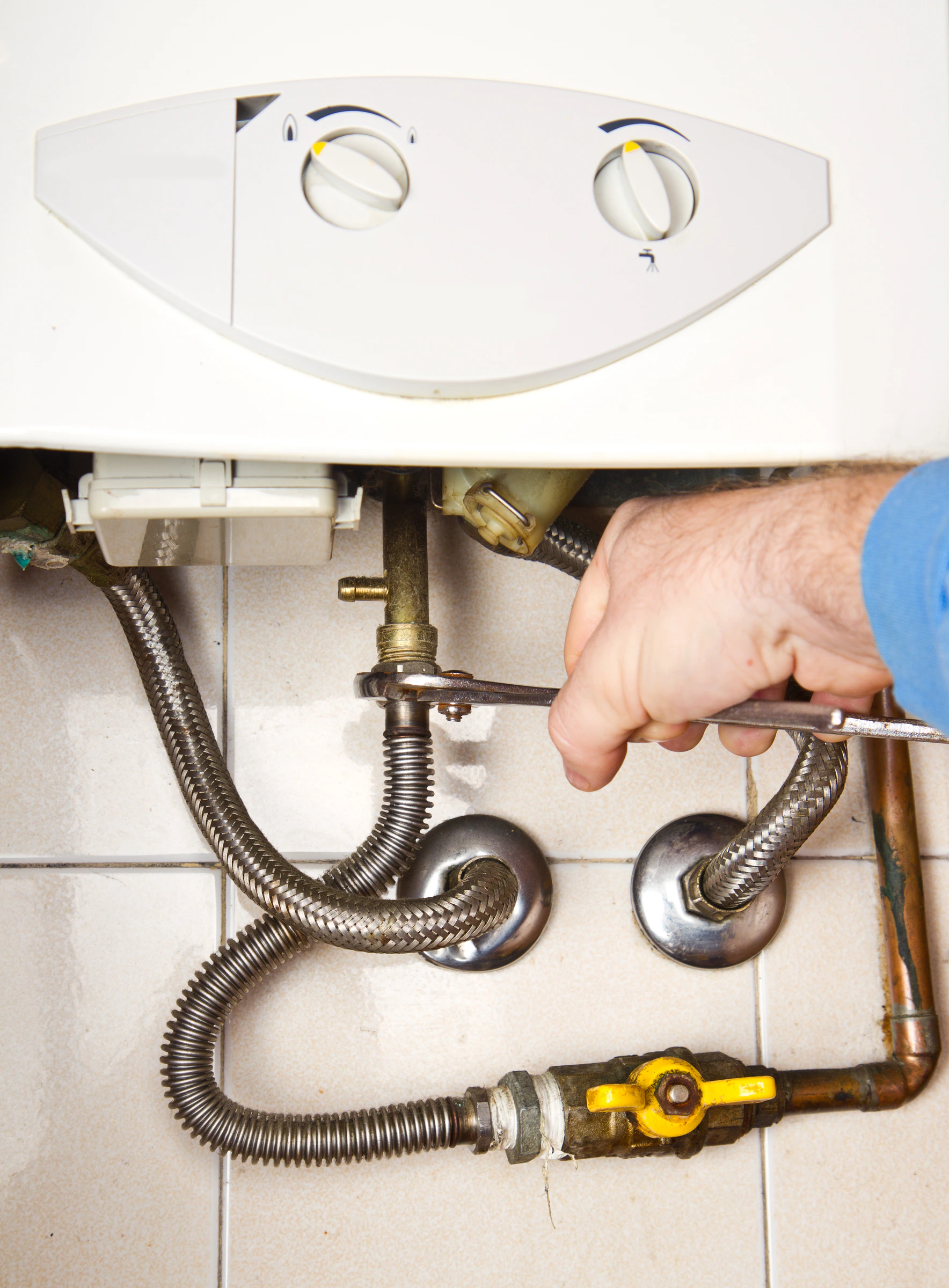
An older boiler may have been connected using an arrangement that is not suitable for the replacement appliance. In some cases, pipework may need to be altered or upgraded so the boiler receives the appropriate gas supply.
The installer may therefore assess:
- The existing gas pipe route and condition.
- The requirements of the replacement appliance.
- The distance between the gas meter and boiler.
- Whether alterations are needed to support the new installation.
- Whether other aspects of the gas supply need further investigation.
This does not mean every boiler replacement needs extensive gas pipework changes. It simply means the existing installation should be assessed rather than assumed to be adequate.
For homeowners researching the cost for boiler installation, asking whether gas supply requirements have been considered can help explain differences between apparently similar quotes.
What Other Installation Components Can Need Attention?
Other systems connected to the boiler can also affect the final scope.
| Installation area | Why it may need attention | Possible effect on scope |
|---|---|---|
| Flue | New appliance may require a different or new flue arrangement | Additional components or labour |
| Gas pipework | Existing supply may need alteration | Pipework and installation work |
| Condensate | Drainage route may not suit the new position | New or modified drainage |
| Controls | Existing controls may not be compatible | New controls or wiring |
| Electrical supply | Electrical arrangements may need adjustment | Additional electrical work |
| Heating pipework | Connections may differ between appliances | Adaptors or pipework changes |
| Carbon monoxide alarm | Existing alarm may be absent, unsuitable or require replacement | Alarm supply and installation |
| Boiler position | Moving the appliance changes the installation route | Additional materials and labour |
The exact requirements should be established from the property and the replacement appliance rather than assumed from a generic installation price.
When Does an Existing Boiler Position Create Extra Work?
Keeping a replacement boiler in the same position can reduce disruption, but it does not guarantee a like-for-like installation.
The new appliance may have different dimensions or connection positions. Pipework may therefore need adapting even if the boiler remains on the same wall.
Relocating the boiler can introduce further considerations, including:
- Longer heating or water pipe runs
- Changes to the flue route
- New condensate arrangements
- Altered electrical connections
- Changes to controls
- Additional wall or cupboard preparation
- Access and making-good requirements
If you are considering moving your boiler, the cost for new boiler installation should be assessed against the complete proposed layout rather than the appliance price alone.
A clear quotation should distinguish between replacing the boiler in its existing position and carrying out a more involved relocation.
Can Safety Checks Lead to Additional Work?
Safety checks do not automatically mean additional charges. Their purpose is to establish whether the installation is suitable and safe.
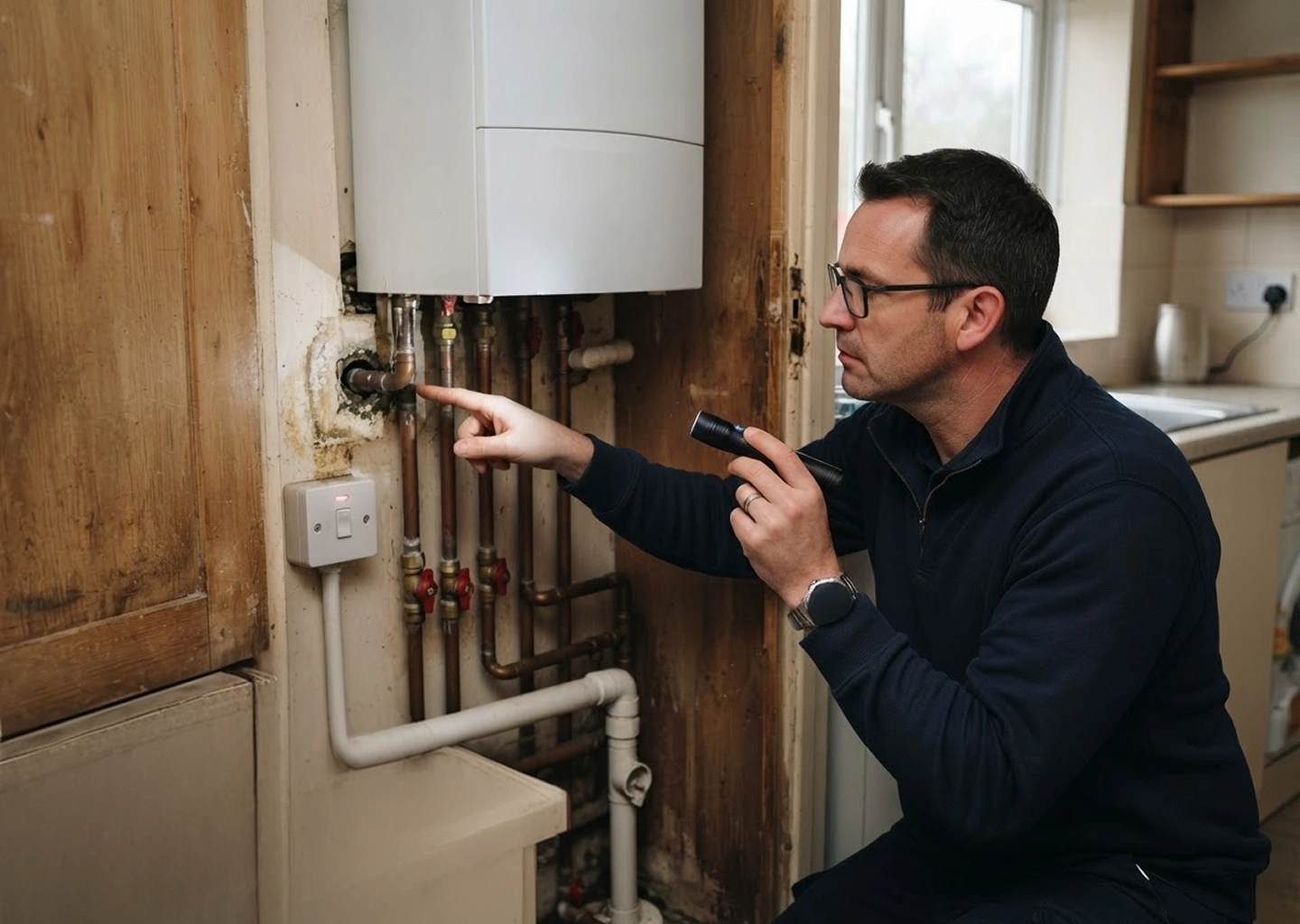
However, a check can identify something that needs correcting before the new boiler can be commissioned.
For example, an installer may identify an issue involving the flue, gas supply, ventilation where relevant, combustion performance or another part of the installation. Addressing that issue can change the scope.
The important distinction is between checking something and finding something that requires remedial work.
A responsible installer should be able to explain:
- What was identified
- Why it matters
- Whether it affects safe operation or compliance
- What work is proposed
- Whether the work is essential, recommended or optional
- What additional cost applies
That explanation gives the homeowner an opportunity to understand the change before work proceeds.
If an installation quote changes after a survey, ask for the reason behind each additional item. KJ Group can discuss the practical requirements involved in your proposed boiler replacement.
What Should Happen If Extra Work Is Discovered During Installation?
Unexpected findings can happen, particularly when an older heating system is being replaced.
The installer may uncover a condition that was not visible during the initial quotation process. For example, pipework behind a boiler or an inaccessible section of the existing installation may only become apparent once the old appliance has been removed.
A sensible process is to pause before carrying out significant additional work and explain the situation to the homeowner.
The discussion should cover:
- The issue that has been found
- Why it needs attention
- The proposed solution
- The additional materials or labour involved
- Any change to the expected completion time
- The revised price, where applicable
This helps prevent confusion when the final invoice differs from the original quotation.
Minor adjustments may sometimes form part of normal installation work, while substantial changes should be clearly communicated.
How Should You Compare Quotes When the Scopes Are Different?
Two boiler quotes can look very different even when the appliance specifications appear similar.
One quotation may include a new flue, controls, commissioning and other installation requirements. Another may list a lower appliance-and-labour figure while treating some components as additional items.
This is why comparing the total scope is more useful than comparing one headline figure.
Look at whether each quotation explains:
- Boiler model and specification
- Flue arrangements
- Gas and heating connections
- Controls
- Condensate arrangements
- Safety-related checks
- Commissioning
- Removal of the old appliance
- Any likely additional work
- Guarantees or documentation provided
- VAT and other applicable charges
The cost for new boiler installation becomes easier to understand when you know exactly what the quoted figure includes.
What Questions Can Help Prevent Unexpected Costs?
Before approving a boiler replacement, homeowners can ask a few practical questions.
Is the price based on a site survey? A survey can identify property-specific requirements before installation begins.
Does the quote include the flue? Ask whether the complete required flue arrangement is included.
Has the existing gas supply been assessed? This helps establish whether additional pipework may be necessary.
Are controls included? The quoted price should make clear whether existing controls will remain or whether replacements are proposed.
What happens if additional safety work is identified? Ask how variations will be explained and approved.
Are removal and commissioning included? The final scope should make clear what happens to the old appliance and what testing and commissioning are part of the installation.
These questions do not need to make the process complicated. They simply help ensure the quotation reflects the work being considered.
Is a Higher Final Cost Always a Sign of Poor Quoting?
Not necessarily.
A quotation is an assessment based on the information available at the time. If a concealed issue or previously unknown installation condition is discovered, additional work may genuinely be necessary.
The concern is not that a quote can ever change. The concern is an unexplained change.
Good communication matters. If the installer identifies additional work, the homeowner should be given a clear explanation and, where practical, an updated price before substantial extra work is completed.
Conversely, if a quote was based on a detailed survey and clearly stated scope, unexpected additions may be less likely.
How Can Homeowners Plan for the Final Installation Cost?
The most useful approach is to treat the boiler replacement as a complete installation project rather than simply a boiler purchase.
Start by establishing what the property needs, then ask what the quoted price covers. If there are possible variables, ask the installer to identify them before work starts.
It can also help to separate costs into three categories:
- Included: Work already covered by the quotation.
- Potential variations: Items that may be required if an issue is discovered.
- Optional improvements: Upgrades that are not essential to completing the installation.
This structure makes it easier to understand where your money is going and reduces the risk of surprises.
For a tailored assessment of your boiler replacement requirements in Mansfield, contact KJ Group to discuss the installation scope and what may need to be considered before work begins.
What Does a Sensible Boiler Installation Scope Look Like?
A well-planned boiler replacement should account for the appliance, connections, flue, controls, condensate arrangements, safety checks and commissioning as appropriate to the property.
It should also recognise that older systems can contain components that need attention before a modern appliance can be installed.
The aim is not to add unnecessary work. It is to identify genuine requirements early and communicate them clearly.
When homeowners understand the scope, they can make a more informed comparison between quotations and ask sensible questions about any proposed changes.
Related articles
Which fuel powers your boiler?

Mains Gas

LPG

Other
At a glance
Replacing a boiler is often treated as a straightforward swap: remove the old appliance, install the new one and reconnect the existing system. In some homes, that may be close to what happens. In others, the installation reveals additional work that needs to be addressed before the new boiler can be safely commissioned.
This is why the cost for boiler installation can sometimes change between an initial discussion and the completed job. The difference is not necessarily caused by an installer adding unnecessary work. It can arise because the final scope depends on the property, existing system, appliance requirements and condition of components that may only become clear during a survey or installation.
For homeowners in Mansfield, understanding which additional items can affect the scope makes it easier to compare quotes and recognise the difference between a genuine safety requirement and an unexplained extra charge.
What Can Change the Scope of a Boiler Installation?
A boiler installation is rarely just about the appliance itself. The installer needs to consider how the boiler connects to the property’s gas, heating, hot water, electrical and condensate arrangements, as well as the flue and relevant safety provisions.
The original boiler may also have been installed under different requirements or with components that are no longer suitable for the replacement appliance.
Potential scope changes can include:
- Replacing or altering the flue
- Changes to gas pipework where required
- Condensate drainage work
- Electrical or controls alterations
- Changes to heating pipework
- Relocating the appliance
- Ventilation-related work where applicable
- Installing or replacing a carbon monoxide alarm where required
- Additional commissioning or testing
- Making good around a changed installation position
Not every property will require all of these. The important point is that a professional quotation should be based on the actual installation conditions rather than simply the boiler model.
If you are unsure whether your existing setup is suitable for a replacement, speak to KJ Group about the installation requirements before committing to a quote.
Why Can the Flue Affect the Final Price?
The flue is one of the most important parts of a gas boiler installation because it carries combustion products safely away from the appliance and property.
When a new boiler replaces an older model, the existing flue cannot automatically be assumed to be suitable. The installer needs to consider the new appliance manufacturer’s requirements, the flue route, termination position and condition of the existing components.
A change may therefore be necessary if:
- The existing flue is not compatible with the new appliance
- Its condition is unsuitable
- The route needs to change because of the new boiler position
- Additional flue components are required
- The existing arrangement does not meet the requirements for the replacement installation
A quotation that allows for a new boiler but excludes necessary flue work can give a misleading impression of the overall project cost.
This is one reason homeowners should ask whether the quoted figure includes the complete flue arrangement and any associated components required for the installation.
Could Gas Pipework Increase the Installation Scope?
Gas supply requirements depend on the appliance, existing pipework, installation layout and other relevant factors.
An older boiler may have been connected using an arrangement that is not suitable for the replacement appliance. In some cases, pipework may need to be altered or upgraded so the boiler receives the appropriate gas supply.
The installer may therefore assess:
- The existing gas pipe route and condition.
- The requirements of the replacement appliance.
- The distance between the gas meter and boiler.
- Whether alterations are needed to support the new installation.
- Whether other aspects of the gas supply need further investigation.
This does not mean every boiler replacement needs extensive gas pipework changes. It simply means the existing installation should be assessed rather than assumed to be adequate.
For homeowners researching the cost for boiler installation, asking whether gas supply requirements have been considered can help explain differences between apparently similar quotes.
What Other Installation Components Can Need Attention?
Other systems connected to the boiler can also affect the final scope.
| Installation area | Why it may need attention | Possible effect on scope |
|---|---|---|
| Flue | New appliance may require a different or new flue arrangement | Additional components or labour |
| Gas pipework | Existing supply may need alteration | Pipework and installation work |
| Condensate | Drainage route may not suit the new position | New or modified drainage |
| Controls | Existing controls may not be compatible | New controls or wiring |
| Electrical supply | Electrical arrangements may need adjustment | Additional electrical work |
| Heating pipework | Connections may differ between appliances | Adaptors or pipework changes |
| Carbon monoxide alarm | Existing alarm may be absent, unsuitable or require replacement | Alarm supply and installation |
| Boiler position | Moving the appliance changes the installation route | Additional materials and labour |
The exact requirements should be established from the property and the replacement appliance rather than assumed from a generic installation price.
When Does an Existing Boiler Position Create Extra Work?
Keeping a replacement boiler in the same position can reduce disruption, but it does not guarantee a like-for-like installation.
The new appliance may have different dimensions or connection positions. Pipework may therefore need adapting even if the boiler remains on the same wall.
Relocating the boiler can introduce further considerations, including:
- Longer heating or water pipe runs
- Changes to the flue route
- New condensate arrangements
- Altered electrical connections
- Changes to controls
- Additional wall or cupboard preparation
- Access and making-good requirements
If you are considering moving your boiler, the cost for new boiler installation should be assessed against the complete proposed layout rather than the appliance price alone.
A clear quotation should distinguish between replacing the boiler in its existing position and carrying out a more involved relocation.
Can Safety Checks Lead to Additional Work?
Safety checks do not automatically mean additional charges. Their purpose is to establish whether the installation is suitable and safe.
However, a check can identify something that needs correcting before the new boiler can be commissioned.
For example, an installer may identify an issue involving the flue, gas supply, ventilation where relevant, combustion performance or another part of the installation. Addressing that issue can change the scope.
The important distinction is between checking something and finding something that requires remedial work.
A responsible installer should be able to explain:
- What was identified
- Why it matters
- Whether it affects safe operation or compliance
- What work is proposed
- Whether the work is essential, recommended or optional
- What additional cost applies
That explanation gives the homeowner an opportunity to understand the change before work proceeds.
If an installation quote changes after a survey, ask for the reason behind each additional item. KJ Group can discuss the practical requirements involved in your proposed boiler replacement.
What Should Happen If Extra Work Is Discovered During Installation?
Unexpected findings can happen, particularly when an older heating system is being replaced.
The installer may uncover a condition that was not visible during the initial quotation process. For example, pipework behind a boiler or an inaccessible section of the existing installation may only become apparent once the old appliance has been removed.
A sensible process is to pause before carrying out significant additional work and explain the situation to the homeowner.
The discussion should cover:
- The issue that has been found
- Why it needs attention
- The proposed solution
- The additional materials or labour involved
- Any change to the expected completion time
- The revised price, where applicable
This helps prevent confusion when the final invoice differs from the original quotation.
Minor adjustments may sometimes form part of normal installation work, while substantial changes should be clearly communicated.
How Should You Compare Quotes When the Scopes Are Different?
Two boiler quotes can look very different even when the appliance specifications appear similar.
One quotation may include a new flue, controls, commissioning and other installation requirements. Another may list a lower appliance-and-labour figure while treating some components as additional items.
This is why comparing the total scope is more useful than comparing one headline figure.
Look at whether each quotation explains:
- Boiler model and specification
- Flue arrangements
- Gas and heating connections
- Controls
- Condensate arrangements
- Safety-related checks
- Commissioning
- Removal of the old appliance
- Any likely additional work
- Guarantees or documentation provided
- VAT and other applicable charges
The cost for new boiler installation becomes easier to understand when you know exactly what the quoted figure includes.
What Questions Can Help Prevent Unexpected Costs?
Before approving a boiler replacement, homeowners can ask a few practical questions.
Is the price based on a site survey? A survey can identify property-specific requirements before installation begins.
Does the quote include the flue? Ask whether the complete required flue arrangement is included.
Has the existing gas supply been assessed? This helps establish whether additional pipework may be necessary.
Are controls included? The quoted price should make clear whether existing controls will remain or whether replacements are proposed.
What happens if additional safety work is identified? Ask how variations will be explained and approved.
Are removal and commissioning included? The final scope should make clear what happens to the old appliance and what testing and commissioning are part of the installation.
These questions do not need to make the process complicated. They simply help ensure the quotation reflects the work being considered.
Is a Higher Final Cost Always a Sign of Poor Quoting?
Not necessarily.
A quotation is an assessment based on the information available at the time. If a concealed issue or previously unknown installation condition is discovered, additional work may genuinely be necessary.
The concern is not that a quote can ever change. The concern is an unexplained change.
Good communication matters. If the installer identifies additional work, the homeowner should be given a clear explanation and, where practical, an updated price before substantial extra work is completed.
Conversely, if a quote was based on a detailed survey and clearly stated scope, unexpected additions may be less likely.
How Can Homeowners Plan for the Final Installation Cost?
The most useful approach is to treat the boiler replacement as a complete installation project rather than simply a boiler purchase.
Start by establishing what the property needs, then ask what the quoted price covers. If there are possible variables, ask the installer to identify them before work starts.
It can also help to separate costs into three categories:
- Included: Work already covered by the quotation.
- Potential variations: Items that may be required if an issue is discovered.
- Optional improvements: Upgrades that are not essential to completing the installation.
This structure makes it easier to understand where your money is going and reduces the risk of surprises.
For a tailored assessment of your boiler replacement requirements in Mansfield, contact KJ Group to discuss the installation scope and what may need to be considered before work begins.
What Does a Sensible Boiler Installation Scope Look Like?
A well-planned boiler replacement should account for the appliance, connections, flue, controls, condensate arrangements, safety checks and commissioning as appropriate to the property.
It should also recognise that older systems can contain components that need attention before a modern appliance can be installed.
The aim is not to add unnecessary work. It is to identify genuine requirements early and communicate them clearly.
When homeowners understand the scope, they can make a more informed comparison between quotations and ask sensible questions about any proposed changes.
Related articles
Which fuel powers your boiler?
Mains Gas
LPG
Other