
Combi Boiler Replacement Mansfield: When Safety Concerns Make a Planned Upgrade More Urgent
Discover when boiler safety concerns can make a planned combi boiler replacement more urgent, from flue issues to combustion and carbon monoxide risks.

Why you can trust our content
We know that the boiler industry can be confusing, but we only use trusted sources, including:





At a glance
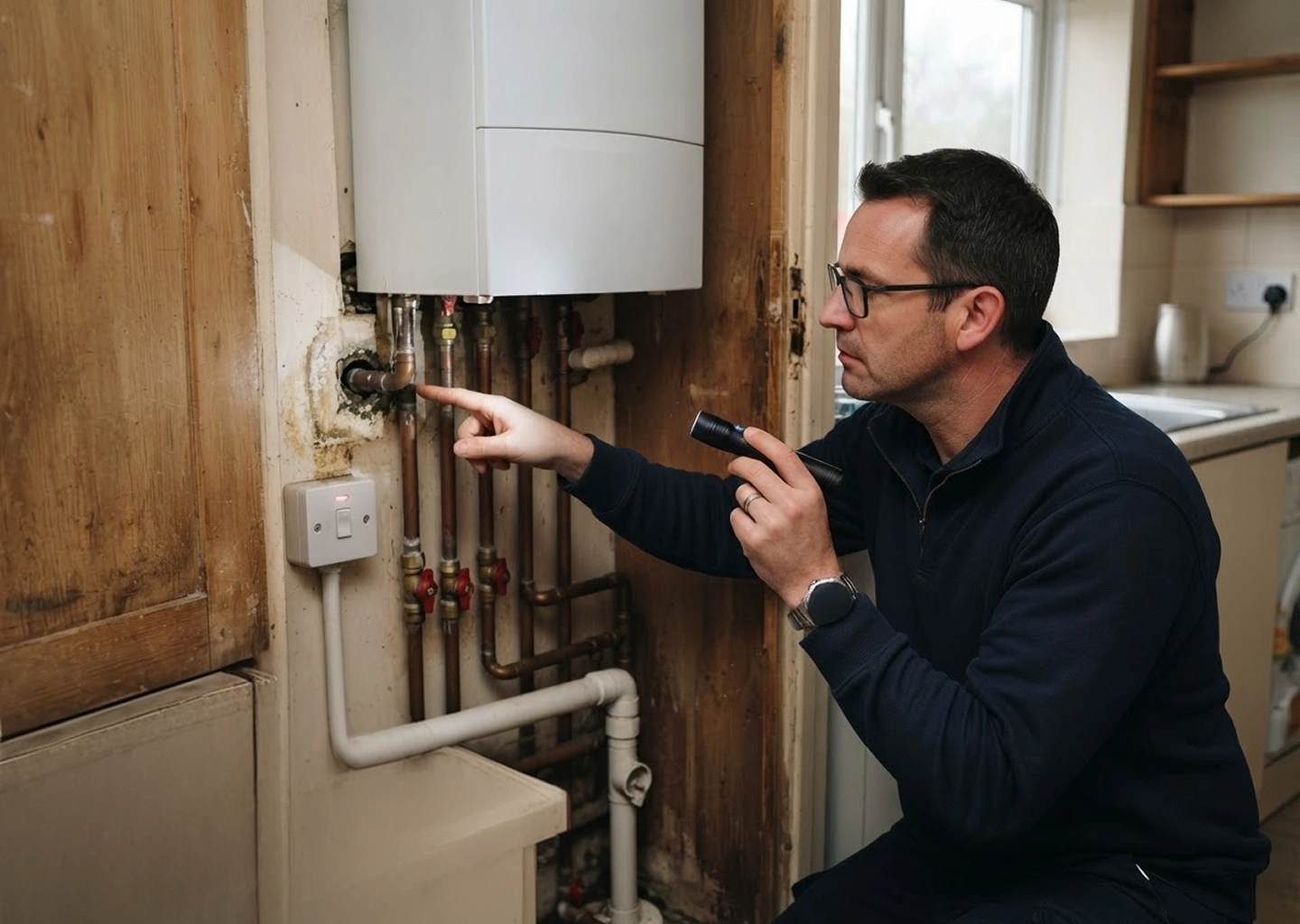
A boiler does not always fail without warning. Sometimes, homeowners notice gradually worsening performance, repeated faults or unusual changes in how the appliance operates. In other situations, a safety concern can make replacing an ageing boiler something that needs attention sooner than originally planned.
For Mansfield homeowners, understanding the difference between normal wear, repairable faults and issues that may require a wider assessment can help when deciding whether to continue using an existing boiler or investigate replacement options.
The combi boiler replacement Mansfield homeowners consider may be planned months in advance, but circumstances can change. A professional assessment can help establish whether the existing appliance remains suitable or whether replacement should be brought forward.
What Can Make a Planned Boiler Replacement More Urgent?
Age alone does not automatically mean a boiler needs replacing. A well-maintained appliance can continue operating for many years. However, several factors can change the situation.
These can include:
- Repeated breakdowns or recurring faults
- Persistent combustion concerns
- Problems with the flue or its condition
- Evidence of inadequate ventilation where applicable
- A carbon monoxide alarm activating
- Corrosion or deterioration around relevant components
- Difficulty obtaining suitable replacement parts
- Increasing repair requirements
- Poor reliability during periods of high demand
- A boiler that is no longer suitable for the property’s needs
Not every warning sign means the boiler is immediately unsafe. Some require investigation, while others may indicate that continued operation needs urgent professional attention.
If there is concern about combustion products or carbon monoxide, homeowners should not attempt to diagnose or repair the appliance themselves.
If your boiler has become unreliable or you have concerns about its safety, contact KJ Group to discuss whether an assessment or replacement should be considered.
Could Flue Problems Change the Replacement Timeline?
The flue is an essential part of a gas boiler installation. It carries combustion products away from the appliance and must be appropriate for the boiler and its installation arrangement.
Problems involving the flue can therefore be more significant than a simple cosmetic defect.
Potential concerns can include:
- Visible damage or deterioration
- An unsuitable or altered flue arrangement
- Concerns about joints or connections
- A route that requires further investigation
- Changes to the boiler position that would affect the flue
- Evidence that the existing arrangement is not appropriate for a replacement appliance
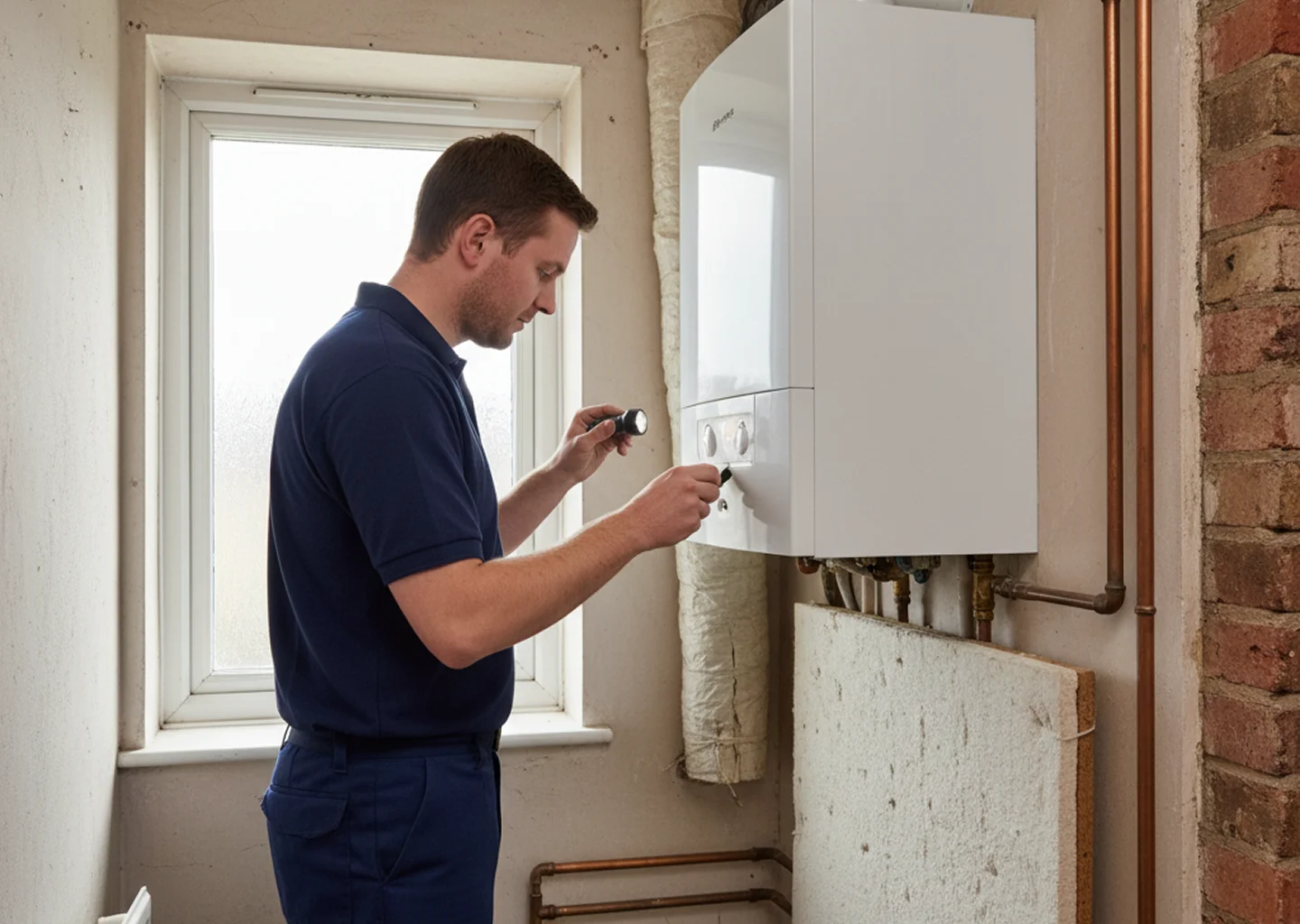
An installer can assess the flue as part of a wider safety review. If an issue is identified, the appropriate response depends on the specific circumstances.
A homeowner should never try to inspect, modify or repair a boiler flue themselves.
When Should Carbon Monoxide Concerns Be Taken Seriously?
Carbon monoxide cannot be relied upon to produce an obvious smell or visible warning. That is why suitable carbon monoxide protection and properly maintained combustion appliances are important.
A carbon monoxide alarm activating should be treated seriously. Follow the alarm manufacturer’s instructions and seek appropriate professional assistance. If anyone experiences symptoms that could be associated with carbon monoxide exposure, they should seek medical advice and move to a safe location as appropriate.
A carbon monoxide concern does not automatically mean the boiler must be replaced. A qualified professional needs to investigate the appliance, flue, ventilation where applicable and surrounding installation.
However, where an older appliance has ongoing combustion or safety problems, the findings may influence whether continued repairs are sensible.
Can Repeated Boiler Faults Be a Reason to Consider Replacement?
One isolated fault does not necessarily justify replacing a boiler.
The bigger question is whether problems are becoming recurrent and whether the appliance remains economical and practical to maintain.
Consider:
| Situation | What it may indicate | What to consider |
|---|---|---|
| One minor fault | Isolated component issue | Professional repair assessment |
| Repeated faults | Reliability may be declining | Repair history and future costs |
| Difficult-to-source parts | Longer repair times may occur | Long-term support |
| Combustion concern | Safety requires investigation | Immediate professional assessment |
| Flue concern | Installation may need attention | Flue and appliance assessment |
| Frequent pressure problems | Underlying system issue possible | Full heating-system assessment |
| Several major repairs | Continuing ownership may become less practical | Replacement options |
The pattern matters more than any single fault.
If a boiler is repeatedly failing and requires increasingly expensive repairs, replacement may become a more practical option. The decision should be based on the condition of the appliance, repair requirements, safety considerations and the homeowner’s circumstances.
Does an Older Boiler Automatically Need Replacing?
No.
Boiler age is one factor, but it should not be used on its own to determine whether an appliance is unsafe or unsuitable.
A professional assessment can consider the boiler’s condition, maintenance history, available parts, performance and installation arrangement.
However, older appliances can present a different set of considerations compared with a modern replacement. Components may be more difficult to source, efficiency may differ, and an ageing installation may require additional work to support a replacement.
For homeowners considering combi boiler replacement Mansfield, understanding the condition of the whole installation is more useful than focusing only on the boiler’s age.
How Can Safety Concerns Affect Boiler Replacement Costs?
The boiler replacement cost is influenced by the scope of the work, not simply the boiler itself.
If the existing installation can be replaced with limited alterations, the project may be relatively straightforward. If safety or compatibility issues require additional work, the overall scope can increase.
Potential cost factors include:
- Boiler model and output
- Flue requirements
- Gas supply alterations where required
- Heating pipework modifications
- Condensate drainage
- Controls and electrical work
- Boiler relocation
- Removal of the existing appliance
- Additional installation components
- Remedial work identified during assessment
This is why comparing boiler prices without comparing installation scope can be misleading.
A lower initial figure may not represent the same level of work as a quotation that includes all required components.
If you are planning ahead but have concerns about your current boiler, KJ Group can help you understand which parts of the installation may need attention before you commit to replacement.
Could Safety Issues Mean a Boiler Should Not Be Used?
Potentially, yes, depending on what has been identified.
Homeowners should not make their own judgement about whether a gas appliance is safe to continue using if there is a serious concern.
Warning signs that warrant professional attention can include:
- A carbon monoxide alarm activating
- Unusual combustion-related symptoms or observations
- A damaged flue
- Signs of scorching or overheating around the appliance
- Unusual smells associated with the installation
- Persistent unexplained faults
- Visible damage to relevant components
If a gas appliance is suspected to be unsafe, stop using it and seek advice from an appropriately qualified professional. In an emergency, follow relevant gas safety guidance and contact the appropriate emergency service.
Replacement should only be considered after the situation has been properly assessed.
What Should Be Checked Before Replacing an Older Combi Boiler?
A replacement assessment should look beyond the front of the boiler.
The installer may need to consider:
The existing appliance
Its condition, age, fault history and general performance can provide useful context.
The flue
The flue route, condition and compatibility need to be considered for the proposed installation.
Gas supply
The existing gas supply arrangement may need assessment to determine whether it is suitable for the replacement appliance.
Condensate drainage
Modern condensing boilers require appropriate condensate arrangements, so the drainage route should be considered.
Heating system
Radiators, pipework, controls and system condition can all affect the wider installation.
Installation location
The available space, access and proposed appliance position can influence the work involved.
Safety provisions
Relevant carbon monoxide protection and other safety considerations should be addressed as part of the installation.
A proper assessment helps distinguish between work that is necessary, work that is recommended and optional improvements.
Is Replacement Better Than Repair in Every Safety Situation?
Not necessarily.
Some safety-related problems can be corrected without replacing the boiler. Others may involve an ageing appliance where repeated repairs or wider installation issues make replacement worth considering.
The decision should take account of:
- The nature of the fault
- The appliance’s overall condition
- Whether suitable parts are available
- Previous repair history
- The likely cost and extent of remedial work
- The expected future reliability
- Whether the existing boiler meets the property’s current needs
A professional should explain the available options rather than assuming replacement is automatically the answer.
How Should You Approach a Planned Replacement After a Safety Concern?
If your boiler has raised safety concerns but is not currently presenting an emergency, it can be useful to plan the replacement carefully rather than waiting for a complete breakdown.
Start by establishing what has been identified and whether any immediate action is required.
Then consider:
- Whether the current boiler should remain in use.
- What repairs, if any, are available.
- Whether replacement is more practical long term.
- Whether the existing installation needs alterations.
- What type and output of replacement boiler are appropriate.
- Whether the quotation covers the complete installation.
- What safety checks and commissioning will be carried out.
This approach can help prevent a rushed decision later, particularly if the existing appliance is becoming unreliable.
What Should a Replacement Quote Include When Safety Is a Concern?
A detailed quotation should make the proposed scope understandable.
Depending on the property, it may identify:
- Boiler supply
- Installation labour
- Flue components
- Gas and heating connections
- Condensate arrangements
- Controls
- Removal of the existing appliance
- Relevant safety checks
- Commissioning
- Any additional work identified during the assessment
It should also make clear which elements are included and whether any assumptions have been made.
The boiler replacement cost should therefore be considered alongside the work required to deliver a complete installation.
If an installer identifies additional work after the quotation, ask what has changed, why the work is needed and how the revised price has been calculated.
When you are ready to explore replacement options, speak to KJ Group for a tailored discussion about your existing boiler, proposed installation and the work that may be involved.
How Can Homeowners Recognise When Planning Ahead Makes Sense?
There is a difference between an appliance that has reached the end of its practical service life and one that simply needs routine maintenance.
Planning ahead can be useful when a boiler is becoming increasingly unreliable, repairs are recurring or safety-related concerns have started to appear.
It gives homeowners time to consider:
- Replacement boiler options
- Installation requirements
- Budget
- Timing
- Potential changes to controls or system components
- Any work needed around the existing appliance
A planned replacement can also avoid making a decision during an unexpected winter breakdown, when heating and hot water requirements are more urgent.
Related articles
Which fuel powers your boiler?

Mains Gas

LPG

Other
At a glance
A boiler does not always fail without warning. Sometimes, homeowners notice gradually worsening performance, repeated faults or unusual changes in how the appliance operates. In other situations, a safety concern can make replacing an ageing boiler something that needs attention sooner than originally planned.
For Mansfield homeowners, understanding the difference between normal wear, repairable faults and issues that may require a wider assessment can help when deciding whether to continue using an existing boiler or investigate replacement options.
The combi boiler replacement Mansfield homeowners consider may be planned months in advance, but circumstances can change. A professional assessment can help establish whether the existing appliance remains suitable or whether replacement should be brought forward.
What Can Make a Planned Boiler Replacement More Urgent?
Age alone does not automatically mean a boiler needs replacing. A well-maintained appliance can continue operating for many years. However, several factors can change the situation.
These can include:
- Repeated breakdowns or recurring faults
- Persistent combustion concerns
- Problems with the flue or its condition
- Evidence of inadequate ventilation where applicable
- A carbon monoxide alarm activating
- Corrosion or deterioration around relevant components
- Difficulty obtaining suitable replacement parts
- Increasing repair requirements
- Poor reliability during periods of high demand
- A boiler that is no longer suitable for the property’s needs
Not every warning sign means the boiler is immediately unsafe. Some require investigation, while others may indicate that continued operation needs urgent professional attention.
If there is concern about combustion products or carbon monoxide, homeowners should not attempt to diagnose or repair the appliance themselves.
If your boiler has become unreliable or you have concerns about its safety, contact KJ Group to discuss whether an assessment or replacement should be considered.
Could Flue Problems Change the Replacement Timeline?
The flue is an essential part of a gas boiler installation. It carries combustion products away from the appliance and must be appropriate for the boiler and its installation arrangement.
Problems involving the flue can therefore be more significant than a simple cosmetic defect.
Potential concerns can include:
- Visible damage or deterioration
- An unsuitable or altered flue arrangement
- Concerns about joints or connections
- A route that requires further investigation
- Changes to the boiler position that would affect the flue
- Evidence that the existing arrangement is not appropriate for a replacement appliance
An installer can assess the flue as part of a wider safety review. If an issue is identified, the appropriate response depends on the specific circumstances.
A homeowner should never try to inspect, modify or repair a boiler flue themselves.
When Should Carbon Monoxide Concerns Be Taken Seriously?
Carbon monoxide cannot be relied upon to produce an obvious smell or visible warning. That is why suitable carbon monoxide protection and properly maintained combustion appliances are important.
A carbon monoxide alarm activating should be treated seriously. Follow the alarm manufacturer’s instructions and seek appropriate professional assistance. If anyone experiences symptoms that could be associated with carbon monoxide exposure, they should seek medical advice and move to a safe location as appropriate.
A carbon monoxide concern does not automatically mean the boiler must be replaced. A qualified professional needs to investigate the appliance, flue, ventilation where applicable and surrounding installation.
However, where an older appliance has ongoing combustion or safety problems, the findings may influence whether continued repairs are sensible.
Can Repeated Boiler Faults Be a Reason to Consider Replacement?
One isolated fault does not necessarily justify replacing a boiler.
The bigger question is whether problems are becoming recurrent and whether the appliance remains economical and practical to maintain.
Consider:
| Situation | What it may indicate | What to consider |
|---|---|---|
| One minor fault | Isolated component issue | Professional repair assessment |
| Repeated faults | Reliability may be declining | Repair history and future costs |
| Difficult-to-source parts | Longer repair times may occur | Long-term support |
| Combustion concern | Safety requires investigation | Immediate professional assessment |
| Flue concern | Installation may need attention | Flue and appliance assessment |
| Frequent pressure problems | Underlying system issue possible | Full heating-system assessment |
| Several major repairs | Continuing ownership may become less practical | Replacement options |
The pattern matters more than any single fault.
If a boiler is repeatedly failing and requires increasingly expensive repairs, replacement may become a more practical option. The decision should be based on the condition of the appliance, repair requirements, safety considerations and the homeowner’s circumstances.
Does an Older Boiler Automatically Need Replacing?
No.
Boiler age is one factor, but it should not be used on its own to determine whether an appliance is unsafe or unsuitable.
A professional assessment can consider the boiler’s condition, maintenance history, available parts, performance and installation arrangement.
However, older appliances can present a different set of considerations compared with a modern replacement. Components may be more difficult to source, efficiency may differ, and an ageing installation may require additional work to support a replacement.
For homeowners considering combi boiler replacement Mansfield, understanding the condition of the whole installation is more useful than focusing only on the boiler’s age.
How Can Safety Concerns Affect Boiler Replacement Costs?
The boiler replacement cost is influenced by the scope of the work, not simply the boiler itself.
If the existing installation can be replaced with limited alterations, the project may be relatively straightforward. If safety or compatibility issues require additional work, the overall scope can increase.
Potential cost factors include:
- Boiler model and output
- Flue requirements
- Gas supply alterations where required
- Heating pipework modifications
- Condensate drainage
- Controls and electrical work
- Boiler relocation
- Removal of the existing appliance
- Additional installation components
- Remedial work identified during assessment
This is why comparing boiler prices without comparing installation scope can be misleading.
A lower initial figure may not represent the same level of work as a quotation that includes all required components.
If you are planning ahead but have concerns about your current boiler, KJ Group can help you understand which parts of the installation may need attention before you commit to replacement.
Could Safety Issues Mean a Boiler Should Not Be Used?
Potentially, yes, depending on what has been identified.
Homeowners should not make their own judgement about whether a gas appliance is safe to continue using if there is a serious concern.
Warning signs that warrant professional attention can include:
- A carbon monoxide alarm activating
- Unusual combustion-related symptoms or observations
- A damaged flue
- Signs of scorching or overheating around the appliance
- Unusual smells associated with the installation
- Persistent unexplained faults
- Visible damage to relevant components
If a gas appliance is suspected to be unsafe, stop using it and seek advice from an appropriately qualified professional. In an emergency, follow relevant gas safety guidance and contact the appropriate emergency service.
Replacement should only be considered after the situation has been properly assessed.
What Should Be Checked Before Replacing an Older Combi Boiler?
A replacement assessment should look beyond the front of the boiler.
The installer may need to consider:
The existing appliance
Its condition, age, fault history and general performance can provide useful context.
The flue
The flue route, condition and compatibility need to be considered for the proposed installation.
Gas supply
The existing gas supply arrangement may need assessment to determine whether it is suitable for the replacement appliance.
Condensate drainage
Modern condensing boilers require appropriate condensate arrangements, so the drainage route should be considered.
Heating system
Radiators, pipework, controls and system condition can all affect the wider installation.
Installation location
The available space, access and proposed appliance position can influence the work involved.
Safety provisions
Relevant carbon monoxide protection and other safety considerations should be addressed as part of the installation.
A proper assessment helps distinguish between work that is necessary, work that is recommended and optional improvements.
Is Replacement Better Than Repair in Every Safety Situation?
Not necessarily.
Some safety-related problems can be corrected without replacing the boiler. Others may involve an ageing appliance where repeated repairs or wider installation issues make replacement worth considering.
The decision should take account of:
- The nature of the fault
- The appliance’s overall condition
- Whether suitable parts are available
- Previous repair history
- The likely cost and extent of remedial work
- The expected future reliability
- Whether the existing boiler meets the property’s current needs
A professional should explain the available options rather than assuming replacement is automatically the answer.
How Should You Approach a Planned Replacement After a Safety Concern?
If your boiler has raised safety concerns but is not currently presenting an emergency, it can be useful to plan the replacement carefully rather than waiting for a complete breakdown.
Start by establishing what has been identified and whether any immediate action is required.
Then consider:
- Whether the current boiler should remain in use.
- What repairs, if any, are available.
- Whether replacement is more practical long term.
- Whether the existing installation needs alterations.
- What type and output of replacement boiler are appropriate.
- Whether the quotation covers the complete installation.
- What safety checks and commissioning will be carried out.
This approach can help prevent a rushed decision later, particularly if the existing appliance is becoming unreliable.
What Should a Replacement Quote Include When Safety Is a Concern?
A detailed quotation should make the proposed scope understandable.
Depending on the property, it may identify:
- Boiler supply
- Installation labour
- Flue components
- Gas and heating connections
- Condensate arrangements
- Controls
- Removal of the existing appliance
- Relevant safety checks
- Commissioning
- Any additional work identified during the assessment
It should also make clear which elements are included and whether any assumptions have been made.
The boiler replacement cost should therefore be considered alongside the work required to deliver a complete installation.
If an installer identifies additional work after the quotation, ask what has changed, why the work is needed and how the revised price has been calculated.
When you are ready to explore replacement options, speak to KJ Group for a tailored discussion about your existing boiler, proposed installation and the work that may be involved.
How Can Homeowners Recognise When Planning Ahead Makes Sense?
There is a difference between an appliance that has reached the end of its practical service life and one that simply needs routine maintenance.
Planning ahead can be useful when a boiler is becoming increasingly unreliable, repairs are recurring or safety-related concerns have started to appear.
It gives homeowners time to consider:
- Replacement boiler options
- Installation requirements
- Budget
- Timing
- Potential changes to controls or system components
- Any work needed around the existing appliance
A planned replacement can also avoid making a decision during an unexpected winter breakdown, when heating and hot water requirements are more urgent.
Related articles
Which fuel powers your boiler?
Mains Gas
LPG
Other